
Set Up a Covered Call in 20 Minutes (Shares, Strike, DTE, Exit — No Guesswork)

Your First Covered Call in 20 Minutes
The CCR Setup Checklist (Shares, Strike, DTE, Exit)
A covered call is one of the fastest ways to turn “I own shares” into a rules-based cashflow overlay, as long as you treat it like a process, not a prediction.
At its core, a covered call is simple. You own 100 shares and sell 1 call option against them.
What makes it powerful isn’t the structure, it’s the discipline it forces. You define your strike, your time horizon, and your exit before emotions show up.
The tradeoff is straightforward and non-negotiable. You give up upside above the strike in exchange for premium, and you still carry downside risk. The premium helps, but it doesn’t protect you completely. That’s exactly how buy-write strategies are designed.
Why this matters now: markets are faster, more options-driven, and more short-term focused than ever. With T+1 settlement and heavy short-dated options activity, execution and consistency matter more than trying to “be right.”
Assumptions (Keep It Simple)
$50,000 account
100-share lots
Single stock covered calls
No assumptions on broker, taxes, or margin
This is process-focused. No promises, no hype. You can lose money doing this.
The 20-Minute CCR Setup Checklist
Minute 0–3: Pick Shares You’re Willing to Sell (Start with a Curated List)
This is the real decision. Everything else is mechanics.
If you already have a solid watchlist, use it.
If not, this is where most people get stuck or make weak picks. They bounce between tickers, chase what’s moving, or settle for poor setups.
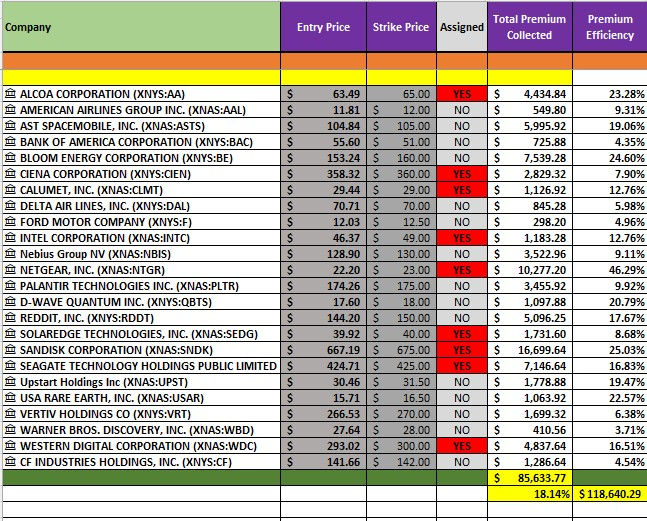
A cleaner approach is to start with a pre-filtered list like the CCR Top 10 or Full List, where contracts are already screened for liquidity, premium quality, and workable strike positioning. It removes a lot of noise and lets you focus on execution instead of hunting.
From there, pick a stock you actually want to own and are comfortable selling at a predefined price.
If you’d be annoyed watching it get called away, you picked the wrong stock.
Quick reality check:
Tight spreads matter more than people think
Wide spreads quietly eat your edge
Minute 3–6: Confirm You’re Actually Covered
You need 100 shares per contract. No exceptions.
If you don’t have 100 shares, stop. That’s not a covered call.
Simple sizing guideline:
Keep a single position around 10%–25% of your account unless you’re intentionally concentrated.
On a $50k account, that usually means a $10k–$12.5k position.
Minute 6–10: Pick Your Strike Using Delta (Not Vibes)
Delta keeps your decisions consistent.
0.20–0.35 delta → balanced approach
Around 0.30 → widely used reference point
Think of it this way:
If you’d be happy selling your shares at +2% to +5%, choose a strike in that range and confirm the delta lines up.
If your delta is pushing 0.50 or higher, you’re not just “being aggressive”, you’re choosing a high probability of assignment.
That’s fine, just be intentional.
Minute 10–13: Choose Your DTE (Days to Expiration)
This is where inconsistency creeps in for most people.
7–14 DTE → faster cycles, more active management
21–45 DTE → fewer decisions, smoother management
Neither is better. The key is consistency.
Pick a window and stick to it so you can refine your process instead of resetting it every week.
Minute 13–15: Place the Order (Don’t Donate Edge)
Use a limit order. Always.
Sell to Open
Start near mid-price
Adjust patiently
If you’re constantly hitting the bid, you’re giving up edge without realizing it.
Write down:
Premium collected
Strike
Expiration
What you’ll do if the stock moves quickly
Minute 15–18: Define Your Exit Before You Need It
This is where most trades fall apart.
Pick a simple plan:
Take profits at 50%–75% of max premium
Don’t hold just to squeeze the last few dollars
If expiration is close and things are messy, simplify
If the stock rallies and you want to keep shares, you can roll.
Just remember, rolling is a new trade, not something you’re obligated to do.
Minute 18–20: Plan for Assignment (This Is Part of the Strategy)
If your call expires in the money, your shares will likely be sold.
That’s not a mistake. That’s one of the intended outcomes.
Operational reality:
Markets are now T+1
Settlement happens fast
Early assignment can occur, especially around dividends
If you don’t plan for this upfront, you’ll react emotionally later.
The Bigger Point
Covered calls aren’t about maximizing premium on every trade.
They’re about building a repeatable system that removes decision fatigue.
You’re not predicting.
You’re defining:
What price you’re willing to sell at
How much income you’re targeting
How you’ll respond when things don’t go perfectly
Do that consistently, and the strategy starts working for you instead of against you.
CTA
If you want this as a clean weekly annotated setups from the CCR Top 10 and Full List, try the subscription for a low-friction trial and compare it to your current workflow of scanning and guessing.


Comments